Showing posts with label conservation. Show all posts

Thursday, 20 May 2010

Perspectives.....

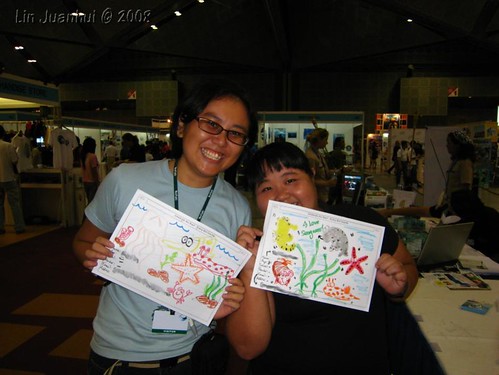
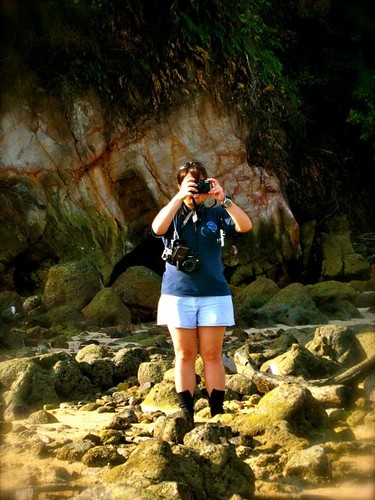
My kayaking trip at Ubin has stirred up a series of personal reflections for me... No, the photo below has no relation to the topic XD It's just that I'm more trigger-happy than a camera whore and I don't really have candid shots of me.

Have never really been a sporty person but it seems that ever since undergraduate days, I have been becoming more and more of an outdoorsy person. It is through books that I slowly grew to learn about nature, and some of the biodiversity around us. And it is with that that I develop an interest in some outdoors activities. First there were the intertidal guiding, then came diving, then treeclimbing, cycling (yar, I didn't learn how to cycle until a year or two ago), powerboating and Sunday's kayaking. It really does seem serendipitous how things have been working out in my life so far, yet I can't help but feel that it was all planned out.

It's not only the wonder of how I've come to the role in which I have with regards to nature and biodiversity but also the actual miraculousness of nature that has gotten me thinking. And it seems that now I am starting to see and open doors to new areas and perspectives of experiencing and connecting with nature. How so?

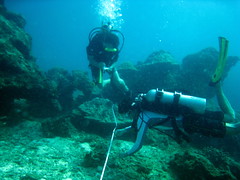
I only went to take my OW and AOW diving certification so that I could have another angle on my FYP. One thing led to another, with me learning LIT methodology, and even helping to conduct ReefCheck training for others! I know that quite a few of my diver friends picked diving up as something unusual to do, caught the bug and have been scratching the itch to get underwater every once in a while. And depending on their instructors/diving kakis, they would gradually start appreciate the marine wildlife and its environment. Yet for me it's the opposite. So from day one I was more in awe of the different kind of milieu that I found whilst diving rather than the actual diving itself.
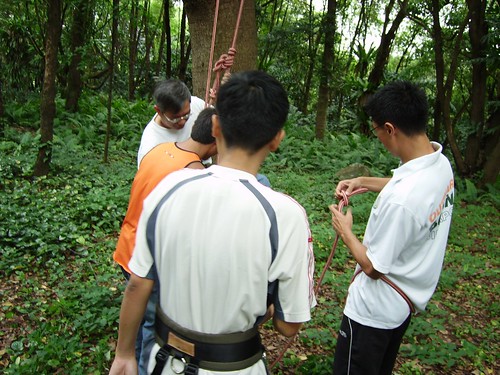
The same thing happened with tree climbing. This time, taking the course with a bunch of fellow intertidal enthusiasts, and again, it was the chance to be up close and personal with the trees that actually got me interested in the course. Still can't tell if I'm much of a convert to tree climbing though, but this is largely due to my sporadic fear of heights. ;p
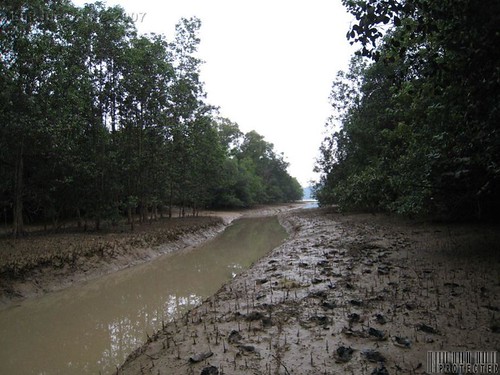
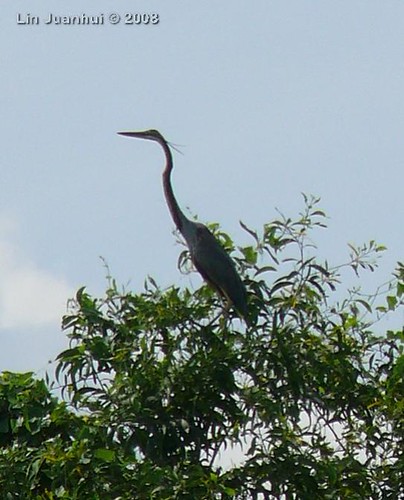
And this brings me to kayaking. Decided to give it a try as one of those "Why not?" things to do. But the trip down the mangroves did show me yet another way for me to explore the great outdoors. Not in the adventure sense, but getting close to some of the trees without the usual sloshing walk, and with the chance to just drift and listen to all those different bird calls.
And it strikes me that all one has to do is to slow down for a moment, take a deep breath and just take it all in. Especially for those of us who are blessed to be in Singapore. Just look at the amount of urbanisation and development we have had here in land scarce Singapore. Yet we have managed to keep enough of our nature spots (i.e. Bukit Timah Nature Reserve, Sungei Buloh Wetlands Reserve, Central Nature Reserve, etc.), as well as have park connectors (that act as green bridges between out fragmented forests on mainland). There is still much nature around us. Maybe more in the form of urban biodiversity than actual wildlife in forests. Every once in a while I lose sight of this fact, and yet I am reminded of it time and again. What better time to have this readjusting of perspective but in the middle of the International Year of Biodiversity, eh? So, the next time you find yourself outdoors, don't be so caught up in the activity you're doing but also take time to look around, take a deep breath, and spot critters in the vicinity.
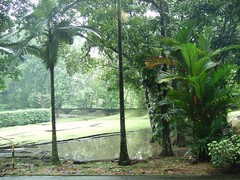
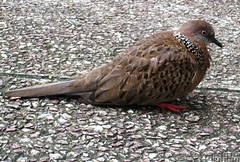
Totally off topic but seems like next year is to be the International Year of Forests! Hmmm.... So what does a divejunkie do then? XD
Click for the rambling...

Tuesday, 6 April 2010

Good Friday on St John's Island

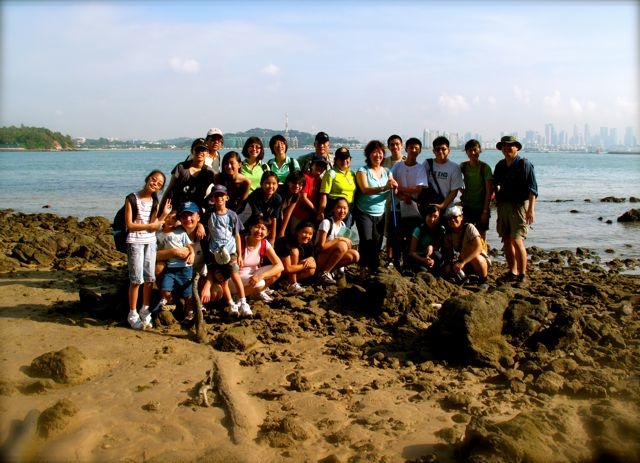
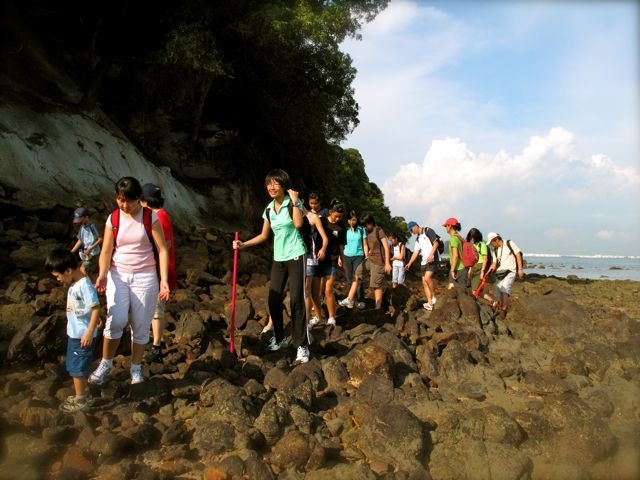
Sorry that this post is coming way late. The coral workshop is some what logistically challenging and there's not too much free time for me to do up this post. Least ways not after I have grabbed my photos and gotten some off other photographers. >.< Boy was the beach on St John's crowded on Good Friday! My Geography teacher from secondary school, Mrs Chua, contacted me about arranging for a guided nature walk for her friends and their family. Interestingly enough, Mrs Chua also facilitated my first ever visit to St John's Island for a geography fieldtrip. That trip stuck in our memories mainly due to the fact that after visiting the mangroves, we were caught in a rather heavy downpour at the rocky cliffs. At least this time around we had better luck with the weather.
IMG_2616 group shot

Since I was in the middle of the SECORE workshop, and we made the arrangements in less than a week, it was a rather informal affair with Abby (who also happened to be on St John's for the workshop) kindly helping to guide half the group. It was nice sharing to a group of enthusiastic family group. Lots of questions asked, and a couple of them were also pointing out some of the raptors that were flying around the vegetation on the rocky cliff!
IMG_2619 navigating the rocky shore

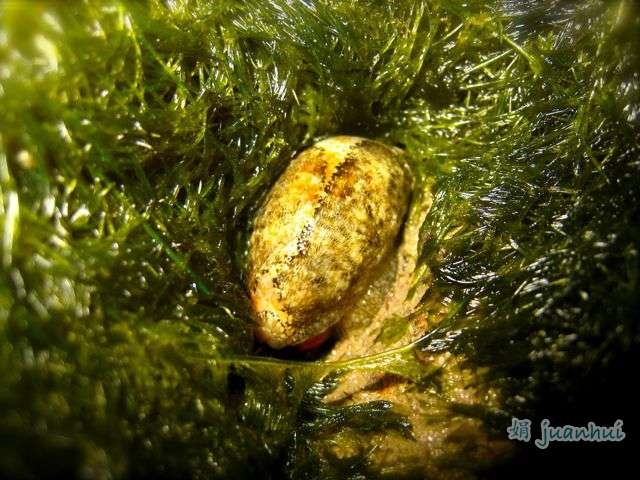
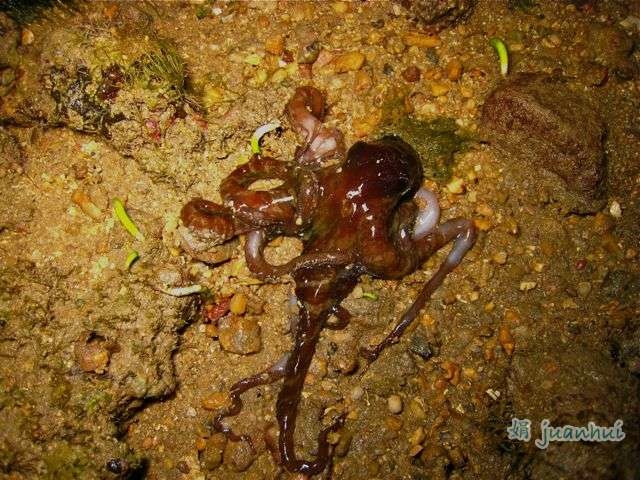
The group kept us pretty busy with their zeal for nature, and we were constantly talking and sharing stories with the group, so much so that I actually didn't take many shots of the organisms.
IMG_7403 cowrie IMG_7400 octopus alert!

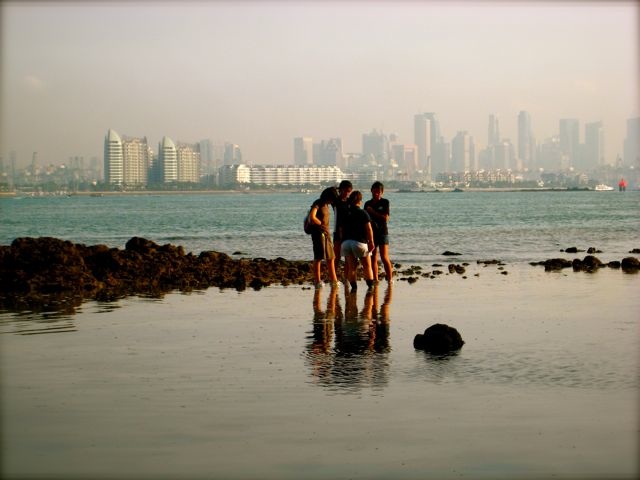
In fact, we stayed out until the tide was starting to look like it would cut off our route back! Some of the group was still heading further along the rocky shore at this point, and we had to quickly start ushering people back to the entry point.
IMG_7411 rising tide

But of course, spending Good Friday out at the shores would call for a group shot, and Abby was quickly loaded with an assortment of cameras to help with that. Really couldn't resist sneaking in a shot of her managing at least 5 cameras!!!!!
IMG_7415 cameras for sale!

At the end of the walk, Mrs Chua and another geography teacher took over for the geography portion of their outing. The students in the group did a little exercise in beach profiling while Abby and I headed back to TMSI to check on the preparations for the first night of expected coral spawning before the group came up to TMSI.

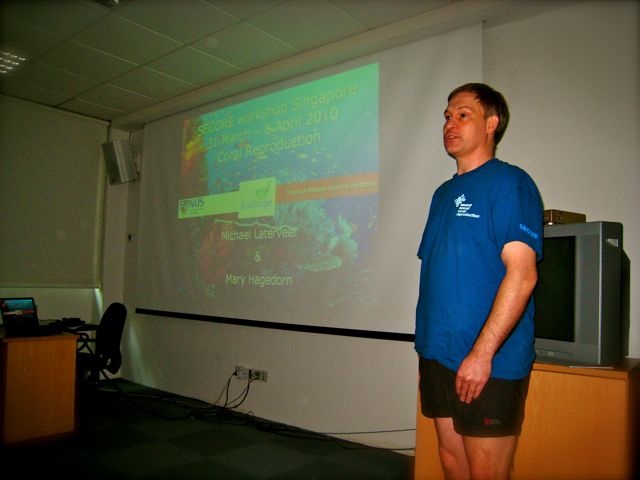
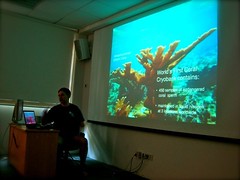
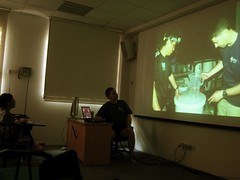
Dr Michael Laterveer (Rotterdam Zoo) was kind enough to do a quick presentation for the group, introducing them corals, mass spawning, and the work that we hoped to get done during the ongoing SECORE workshop.
IMG_7416 SECORE intro IMG_7420 coral at risk IMG_7421 natural storm barriers IMG_7423 coral cryobank IMG_7424 researchers at work

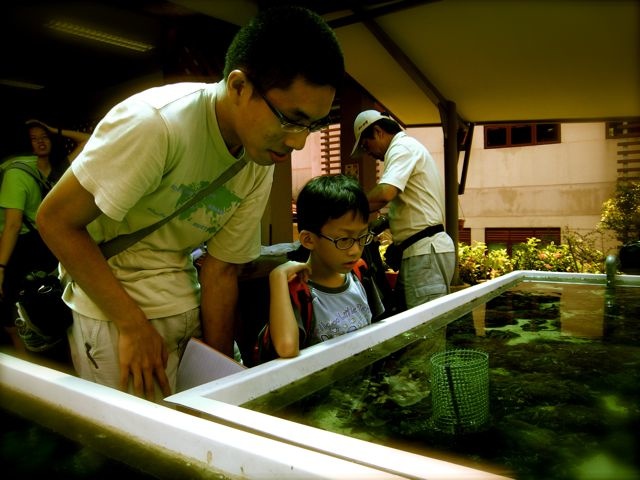
The visit was wrapped up with a quick peek at more marine life in the TMSI touchpool before the group headed back to the beach for a picnic lunch. ^_^
IMG_7425 touchpool

It's also heartening to read that the visit to St John's turned out pretty well in spite of the rushing here and there! Certainly hope the group would come back to St John's for another visit!
Click for the rambling...

Thursday, 1 April 2010

SECORE workshop - setting up

A continuation from my previous post, the folks involved in the our first ever coral spawning workshop aka SECORE workshop here in Singapore came over to the Tropical Marine Science Institute facilities on St John's Island yesterday, and Manon has done up a real quick photo blog of yesterday's orientation and settling in.

Settling in including having a quick intro to TMSI, as well as round 1 of talks/presentations by the various partners. Dr Paul Erftermeijer (Deltares) gave an intro to some of the research that Deltares does, as well as the research areas that Singapore Delft Water Alliance covers. Dr Mary Hagedorn (Smithsonian Institution/HIMB) followed that with talking about some threats to coral reefs and how freezing coral sperm may help in preserving some genetic diversity. Dr Michael Laterveer (Rotterdam Zoo) wrapped up the series of talks with a summary of what was done in the previous 4 SECORE workshops that were conducted in Rotterdam and Puerto Rico.

So on to today.... Or at least the first half of the day. Our shopping crew headed back to mainland Singapore to get piping, hardware, tubing, liquid nitrogen, more drinks and snacks, etc. that would be required to tide us over the long Easter weekend as we get busy with the spawning. Here you can see one of the DBS students in discussion with Michael on setting up rearing bins for the coral babies. Our many thanks go out to Abby, Ned, Mark, Roy, and Juward who spent the morning rushing around for the stuff that we needed, especially for getting everything in time to meet the mid-day ferry back to St John's!


The other (luckier?) team went out to Kusu to get some coral colonies for spawning in the tank. (Yes, Jamie's in the back of a vehicle again XD) Hopefully Mei Lin or Siti would share what happened during the dive. We should find out further tonight if the colonies we have in the tanks spawn. Can't wait!


And what about the rest of us who stayed on at St John's? Here's Dr Mary Hagedorn looking pretty cheery as she prepares for the talk on coral reproduction and spawning that she's currently giving as I'm quickly finishing up this post. And me? I was hoping to get this out before lunch in between troubleshooting here and there. Time to give today's talks my full attention, and we still need to sort out the dive roster!
Click for the rambling...

Monday, 29 March 2010

It's that time of the year again....

I know, it's been AGES since I last put up any entry but life has been busy ;p Anyways, it's coral mass spawning time again here in the waters around this sunny island of Singapore!
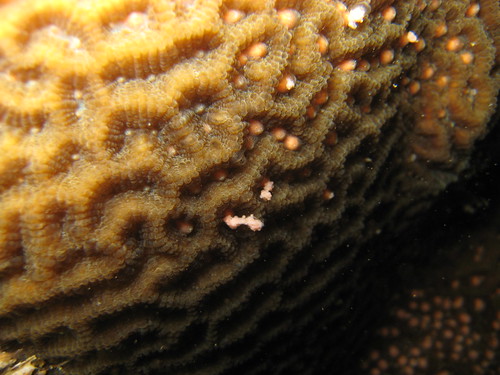
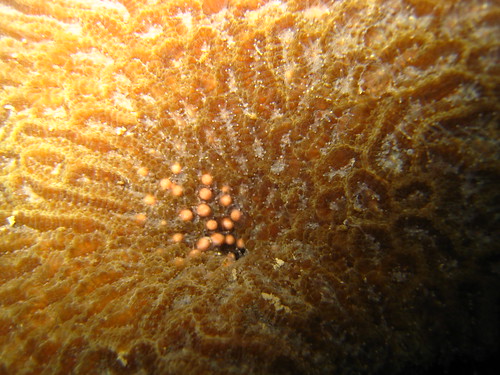
Goniastrea sp. spawning

Well, or at least we're expecting it to be over this coming Easter weekend. In addition to the usual tagging of spawning colonies (done by the NUS Marine Lab in DBS), there's also our first ever coral spawning/breeding/reproduction workshop that's gonna be held at the Tropical Marine Science Institute facilities here on St John's Island! This workshop in Singapore is organized by Michael Laterveer (Rotterdam Zoo, the Netherlands), Dr. James Guest (National University of Singapore), Dr. Eric Borneman (University of Houston, USA), Mark Schick (John G. Shedd Aquarium, USA), Mike Henley (Smithsonian National Zoological Park, USA), and Dr. Mary Hagedorn (Smithsonian Institution, USA) with the kind sponsorship of EcoShape.
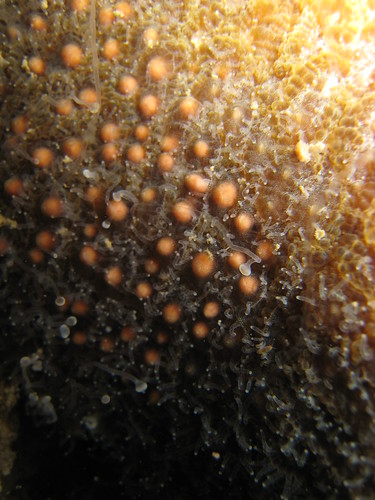
Goniastrea sp. setting (1) Goniastrea sp. setting (3)

There's an official weblog for the workshop, but since I'm part of the supporting crew of the workshop, will try and post little snippets here as well! ^_^
Click for the rambling...

Saturday, 12 September 2009

The Cove - environmental espionage?

Yesh, I'm slow. Just managed to catch "The Cove" with sonnenblume yesterday. It was also kinda apt that I was just reading the news on how Day 1 of the hunt at Taiji was slaughter free, whilst I was on my way to meet her at PS. And am kinda glad that I'm "re-activating" this blog by discussing this docu-movie.... Was supposed to put this up last night but Delphine (that's my 5 year-old IBM) wasn't cooperative... So glad I was still able to capture some of my immediate thoughts on my trusty Touch ^__^
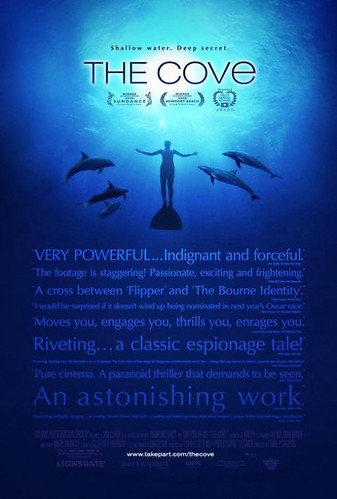
the cove - movie poster

My first impressions when I heard about this movie was that it was gonna be kinda another Sharkwater.... Albeit about dolphins instead of sharks. But alas, first impressions are just that. First impressions. The Cove came out more balanced (in terms of view points), as well as seemingly more objective than Sharkwater. Why seemingly? Mainly because it *is* still mainly a Western perspective of the issues at stake.... But definitely more balanced than Sharkwater. Not that I'm slamming Sharkwater or anything. Sharkwater definitely helped in increasing the awareness on the sharks' plight, even if I felt that their approach was a bit too aggressive and extreme. OPS on the other hand, toed the law (possibly broke quite a few) to get video and sound footage to show the world what was happening in Taiji. This small town in Japan's Wakayama prefecture has been making headlines (at least to me) every year on the dolphin hunt. Would say that every year, without fail, I would be watching depressing Youtube footage of these hunts. But those were random snippets of what was going on there. Nothing quite so coherent as what the OPS team and Ric O'Barry risked life and limb for.

Where Sharkwater did a head-on almost head-to-head confrontation with the shark finning industries, The Cove was more of an adventure into stealth and espionage. The snippet on their FB page puts it really succinctly:
Winner of the Audience Award for Best Documentary at the 2009 Sundance Film Festival, The Cove follows a high-tech dive team on a mission to discover the truth about the international dolphin capture trade as practiced in Taiji, Japan. Utilizing state-of-the-art techniques, including hidden microphones and cameras in fake rocks, the team uncovers how this small seaside village serves as a horrifying microcosm of massive ecological crimes happening worldwide.

The Cove exposes not only the tragedy of dolphin slaughtering in Japan, but also the dangerously high levels of mercury in dolphin meat and seafood, the cruelty in capturing dolphins for entertainment, and the depletion of our ocean’s fisheries by worldwide seafood consumption. We also see how the mandate of the International Whaling Commission has been manipulated by the Japanese Fisheries Agency for its benefit and its subsequent effect on the rest of the world.

That is inherently what The Cove is all about. It is NOT about showing the world the cruelty of these Japanese fishermen, the inhumane slaughter. Part of it is. Kinda. Especially after the intro about Ric O'Barry's days on the Flipper set, and how he turned activist after being on the "darkside" (aka dolphin trainer). BUT, more importantly, I like how other angles of the issue were explored. Like how IWC only covers large ceteceans, and how the issue about bio-accumulation of mercury in ceteceans was generally ignored....

So at least the "killing" section of the hunt seems to be on the winning end... What about the captures for oceanariums/aquariums/dolphinariums? In some ways, they are kinda "necessary evils". Like zoos and the like. How else would the general public get a chance to be up close and personal with these animals? To touch base. To have the same sense of space. And from there, feel for them and their plight. Personally, I wouldn't even think too much about aquariums being too small for large pelagics like whales and dolphins and whale sharks,if not for encountering them in the wild. And yes, I mean the little bit of "wild", that's right here in SG.

Taken off Semakau in June 2009. Courtesy of Karenne Tun.


However, the show is not without it's flaws. The main portion that I really felt was kinda skewed was the section on the interviews they carried out in Tokyo, about whether other Japanese are aware of what's going on in Taiji. I may be wrong, but the logic of those interviews came across as "How can dolphin hunting be a tradition if the rest of Japan doesn't know about it?". Two main issues I have about that. (1)Tokyo is the epitome of modernized Japan, and as with most of the modernized world and countries, there would definitely be some lost in knowledge of culture and traditions. (2)Taiji is a SMALL fishing town/village. Many rural villages have their own local traditions and customs that other parts of the country may not know about. Furthermore, it appears that whale hunting etc. HAS been the villagers' way of life for centuries. At this point in time it would probably be difficult to check with the town if the hunts are truly remnants of their traditional past, as this is gonna be a really touchy issue, with all the bad publicity and all.....

But all in all, it IS a good watch, and definitely a wake up call. At least for those of us who feel that they have a connection to the sea. How many of you out there actually stop to think about how and where do we get our animals in zoos and aquariums? And about how captivity is like for them.... Just my thoughts and all.... Docu-movies like The Cove and Sharkwater ARE a dose of reality amidst all the other run-of-the-mill movies that transport us into the world of story telling....

Taken off Semakau in June 2009. Courtesy of Karenne Tun.


Not even sure if I covered what I wanted to be said and shared... But if you're wondering what YOU can do, firstly, if you haven't caught the movie, go catch it. Preferably bring a friend too. Blog about your thoughts. Write in to you local Japanese embassy (but do be polite!) Read more on the official movie website or here. Write into OPS and/or Ric O'Barry to give encouragement and/or thanks. Sign to petition to WAZA. The list goes on. If this has made some sort of impact to you, get creative and do something positive for the dolphins! ^__^
Click for the rambling...

Wednesday, 3 June 2009

Biodiversity Photo Contest by ACB (22 May-30 Aug 2009)

ACB photo competition - Zooming in on Biodiversity

Zooming in on Biodiversity, the first ASEAN-wide Photo Contest on Biodiversity.

The ASEAN Centre for Biodiversity (ACB) has announced that it is now accepting entries to the First ASEAN-wide photo contest “Zooming in on Biodiversity” during the International Day for Biodiversity 2009 (IDB 2009) celebrations at the SEARCA Auditorium, Los Baños, Laguna on 22 May.

Conducted in partnership with the European Commission (EC), the Association of Southeast Asian Nations (ASEAN), and the Asian Institute of Journalism and Communication (AIJC), the photo contest seeks to popularize biodiversity among its stakeholders and the general public through the medium of photography.

“Among environmental issues and concerns regionally and globally, biodiversity Conservation is among the least known, yet one of the most important. Unfortunately, only a small fraction of the global population, mostly scientists and environmentalists, understands the key role that biodiversity plays in Humankind’s survival. This lack of knowledge often translates to the lack of care for the very environment that nourishes us,” ACB Executive Director Rodrigo U. Fuentes told about 100 scientists, ambassadors, students, and media practitioners who participated in the IDB 2009 programme.

He added that there is an urgent need to popularize biodiversity. “One effective way to accomplish this is to use the power of photos. An old cliché but still very true, a picture paints a thousand words. By translating biodiversity and its relationship with health, food security, Climate change and other everyday human issues into powerful images, we can generate a greater awareness for this often-difficult-to-grasp concept,” Fuentes said.

For his part Delegation of the European Commission to the Philippines Delegation Ambassador Alistair MacDonald said the contest "is an excellent means of increasing public awareness on the importance and beauty of biodiversity. One's photographic eye can encapsulate a very complex issue in a single image."

The contest, which will run from 22 May 2009 to 30 August 2009, is part of ACB’s key thrust to promote regional public awareness on biodiversity conservation. It was also designed to increase the involvement of media practitioners, professional and amateur photographers, young photography hobbyists, and the business sector in generating awareness for biodiversity conservation.

Open to all residents of ASEAN Member States Brunei Darussalam, Cambodia, Indonesia, Lao PDR, Malaysia, Myanmar, Philippines, Singapore, Thailand, and Viet Nam, the contest welcomes entries which are exclusive to the contest, unpublished, and not submitted to previous contests.

Entries should capture various images related to biodiversity (plants, animals, marine life, ASEAN Heritage Parks) or the many benefits that biodiversity brings to human beings, its importance, the threats biodiversity face (deforestation, climate change), or how biodiversity affects lives. Photos showing initiatives to protect biodiversity resources such as plants, animals, and marine Species are also welcome. Entries can also depict: biodiversity as source of food (food and agriculture); biodiversity as source of medicine (health and medicine); biodiversity as source of shelter; biodiversity and climate change; the aesthetic value of biodiversity; biodiversity as source of livelihood; and biodiversity and ecotourism.


For more details on submissions etc., please click here:
Zooming in on Biodiversity
Click for the rambling...

Friday, 22 May 2009

Invasive Aliens in Singapore....

So after a two month long blog drought, juan's finally inspired to blog ;p Just got back from Prof Peter Ng's lunchtime talk on Invasive Alien Species in Singapore, and I was live twittering since I had my trusty iPod touch whilst on wireless@SG. First thing I learnt was that twittering's a little tough when you're basically typing with two fingers instead of ten, and secondly, with a touch screen you can look away from the keyboard whilst typing..... First time I did live twittering of a talk, so there were typos here and there, as well a bit of incoherency. Just hope that the folks who were following my twitter page got the gist of the talk. There's a screen-cap of my tweets as well as the relevant replies that I got during the talk..... It's arranged in chronological order so you can get a gist of the ramblings tweets whilst the talk was going on....

20090522 - IBD talk on IAS by Peter Ng @ SBG

Otterman also put up a quick post on the Biodiversity Crew blog on the live twittering. I do hope that most of the stuff that I posted up's accurate, seeing that I was furiously pounding away on my iPod during the talk!

HAPPY INTERNATIONAL BIOLOGICAL DIVERSITY DAY!!!


p/s. To help you make sense of the ramblings tweets, here's a link to Ria's very nicely done summary of the talk (with photos too!) ^_^
Click for the rambling...

Friday, 30 January 2009

World Wetlands Day 2009 - SBWR photo exhibition

[exhibition announcement] (by Lin Yangchen)

Following hot on the heels of his joint exhibition at one of the libraries, Yangchen presents to us this exhibition on birds flying critters of our very own Sungei Buloh Wetlands Reserve. The exhibition runs from 30 January 2009 to the end of March at Sungei Buloh Wetland Reserve.

Getting to see many of his really enjoyable photos (both for him and us viewers) everyday in office never diminishes the respect I have for him. Really creative shots and he goes the whole mile to get *that* perfect moment. Pretty much one of the most amazing photographers I know personally. And to top it all off, most of them have a focus on nature! Here's a peek at his portfolio on his Flickr site. Do go down to SBWR and get another look at the "Unpredictable Flying Objects"!!

EDIT: Seems like I've provided some mis-information. Not all the photographed subjects are on birds, and not all were taken at Buloh. Just makes me even more curious as to what's gonna be there. Here's what Yangchen commented on the cross-FB posting:
"Thanks very much Juanhui for your message and for doing me such a huge favour publicizing these events. I don't think I deserve such exultation but I'll try my very best to live up to it!

Note: the photos on exhibit at Sungei Buloh include subjects other than birds, and only some were taken at Sungei Buloh. For those who visit this wonderful wildlife sanctuary, I hope my exhibition adds some colour to your experiences there.

Thanks!"

Click for the rambling...

Friday, 19 December 2008

FREE - SciAmEarth 3.0 issue

It really seems to be the season for giving. Other than the Project Seahorse free ID e-book, Scientific American is offering their Earth 3.0 special issue for free download ^_^ Catch is that you are only allowed one download per email address. But then again, how many times would YOU need to DL it? Brilliant idea to guard against hotlinking! The file size is 25.7 MB (97 pages), which might be a bit taxing on those who have a slower connection.... From the content page, it sure looks like a promising read!

Listing of contents/main articles:
(1) COVER STORY: ENERGY Can Nuclear Energy Compete? by Matthew L. Wald
New reactor designs could reduce global warming and fossil-fuel dependence, but utilities are grappling with whether better nukes make more market sense.

(2) ENVIRONMENT China's Energy Paradox by David Biello
A firsthand look at how China's relentlessly expanding use of dirty coal may offset its equally forceful push for cleaner cities and renewable power.

(3) NATIONAL AFFAIRS The Need to Lead in Clean Tech - A conversation with Thomas L. Friedman by Steve Mirsky
The best selling journalist discusses why national security and economics, not just environmentalism, should drive the U.S. to get green aggressively.

(4) URBAN PLANNING Chicago Goes Green by Josh Boak
Can the legendary gritty Windy City really remake itself into a model of sustainable urban living?

(5) CLIMATE STRATEGIES Carbon Cowboys by Ashley Ahearn
Ranchers in Montana get paid by polluters to let the grass grow.

(6) BIODIVERSITY Sharking Guadalupe by Jim Cornfield
Ecotourism has become the unlikely protector of an unexpected endangered species: the great white shark.

(7) HABITAT Regrowing Borneo, Tree by Tree by Jane Braxton Little
To save orangutans, biologist Willie Smits is restoring a rain forest - and creating new livelihoods for the Indonesian families who help him.
Click for the rambling...

"Do one thing for nature this Christmas..."


It's Christmas season and we spread the festive joy to our family and friends, how about sharing a little of the cheer with the critters around us? This is basically a UK/BBC initiative called "Breathing Places", in a bid "to help you get friendlier with wildlife and give you lots of ideas on how you can do just that." With the current economic downturn and all, guess a number of us would be cutting down on overseas travels, so why try out some of the ideas with connecting to nature instead? Would certainly give us a more cost effective alternative to try something different. The suggested ideas are also categorised to "quick", "simple", and "adventurous" so no worries about biting more than you can chew. ^_^ How I wish more of these suggestions are applicable here in sunny SG.....

More details here:
http://www.bbc.co.uk/breathingplaces/
Click for the rambling...

Saturday, 13 December 2008

New Seahorse ID book available!!

Project Seahorse and TRAFFIC North America have come up with an e-book on seahorse identification. Kudos to I-NSC for the heads up ^_^

"The new guide is being distributed to Customs agents around the world to help them implement the new listing of seahorses on Appendix II of the Convention on International Trade in Endangered Species of Wild Fauna and Flora (CITES). It is also available here as a single PDF file."
It's a free e-book so do head over to DiveBooks.Net download your own copy too ^_^ Our local species Hippocampus comes and H.kuda are also inside, so this is definitely yet another valuable resource for guides and would-be-guides to have! dj here is all tuckered out after a relatively packed week of intertidal and underwater activities, so the book review would hafta wait until next week. Do stay tuned and get your own copy now!

EDIT: Seems like there's a bit of unwarranted direct linking to the download (without directing net traffic to the I-NSC website, so the "product page" has been taken off for now. Netizens can't seem to read in detail.... In the meantime, while waiting for the I-NSC mirror to be up again, here's the original distributor, Project Seahorse.

EDIT2: The I-NSC link on Divebooks.net is up again ^_^ Thanks once again to Ivan!!
Click for the rambling...

Tuesday, 25 November 2008

《城市生命线》City Footprints - the Marine Champions episode!

It's been a while but it's time for another installation of dj's quick-n-rambly local nature documentary synopsis/review ^_^ This time tackling a Mandarin programme produced by threesixzero productions!
IMG_4167 interview in progress at RMBR

It starts off by introducing the three "stars" (and intertidal veterans) Chee Kong, Sijie, and Siti, as the protectors of our sea. First portion of this episode is spent tracking the Star Trackers on a monitoring trip to Cyrene reefs. SJ mentions a bit about the insanity of intertidal enthusiasts going out in the wee hours of the morning (like 2am at times!) since we can't choose the timing(s) of the tides.

IMG_4197 the filmcrew sure doesn't let up!

Note that this trip out to Cyrene coincided with showers of blessings, and as the show indicates out 1h-or-so wait on the boat, SJ explains the hazards of going out to the intertidals whilst it is pouring. Other than getting a thorough soaking, one would also be risking lightning strikes....

IMG_4205 filming at Cyrene
IMG_4203 orange flatworm IMG_4208 pencil urchin IMG_4202 our star startrackers ^_^ IMG_4209 tagged knobbly! IMG_4256 elbow crab

A quick introduction to Cyrene's locality (middle of all those petrochemical industries and shipping lanes), and how it is still full of biodiversity (e.g. the new seastar record, Pentaceraster mammilatus we had earlier this year), and it's off the boat for a quick hour's worth of star tracking! The challenges faced are certainly highlighted. First, the temperament of the weather... Then the missing transect marking poles (likely washed away with the tides/currents)..... Taking GPS points, measurements and photographs in a race against time as dusk falls and the tide rises..... (Though the episode *did* leave out the sometimes tricky amphibious landing and boarding...)

IMG_0821 seagrass fruit

And as we are treated to the dusky Cyrene, we are introduced to the second section featuring Siti and TSG.... This time with a fieldtrip to Tanjung Rimau at Sentosa. They have a slightly longer working window than the Star Tracking trip but are still pressed for time. TSG is one of the few groups that collects "scientifically sound data" through transect and quadrat studies.... Some useful insights that came up where the concerns of family members on pursuing marine biology in Singapore. Also, TSG work *doesn't* stop at the data gathering (well, for the bulk of the volunteers it probably does) but the data needs to be analysed, and samples of seagrass also need to be identified and/or deposited at the Singapore Herbarium at the Singapore Botanic Gardens.


Unlike the Star Trackers who focus mainly on Cyrene, TSG actually covers a number of shores, so for the third, and final portion of the show, we are whisked away to Chek Jawa (situated on the eastern side of Pulau Ubin), where all three of them are out for TSG monitoring session. It's no surprise to see Chee Kong and Sijie there since they are one of the first few that joined TeamSeagrass as volunteers! (Yet again demonstrating the multi-hatted facet of many of the shore enthusiasts. How else do you think we get to know each other? ^_^)


On this particular trip, around half the volunteers were TSG and/or CJ virgins, making it easy to link to the need for sharing and training. Capacity building is absolutely necessary for out local NGOs to continue doing their job of sharing and caring for our marine environment. Saving the environment is certainly not a individual's job. General support from the public is needed to make things happen. Just look at how the planned 2001 reclamation of Chek Jawa was postponed for 10 years (and hopefully indefinitely) from the efforts of a group of nature enthusiasts who created a ripple effect, causing everyday Singaporeans to start speaking up for our shores.

And the episode ends on this note. On how the limitless zeal and love these three young people have resulted in them walking the path of shore volunteers, and that their stories have only just begun!
Click for the rambling...